
About Ibi
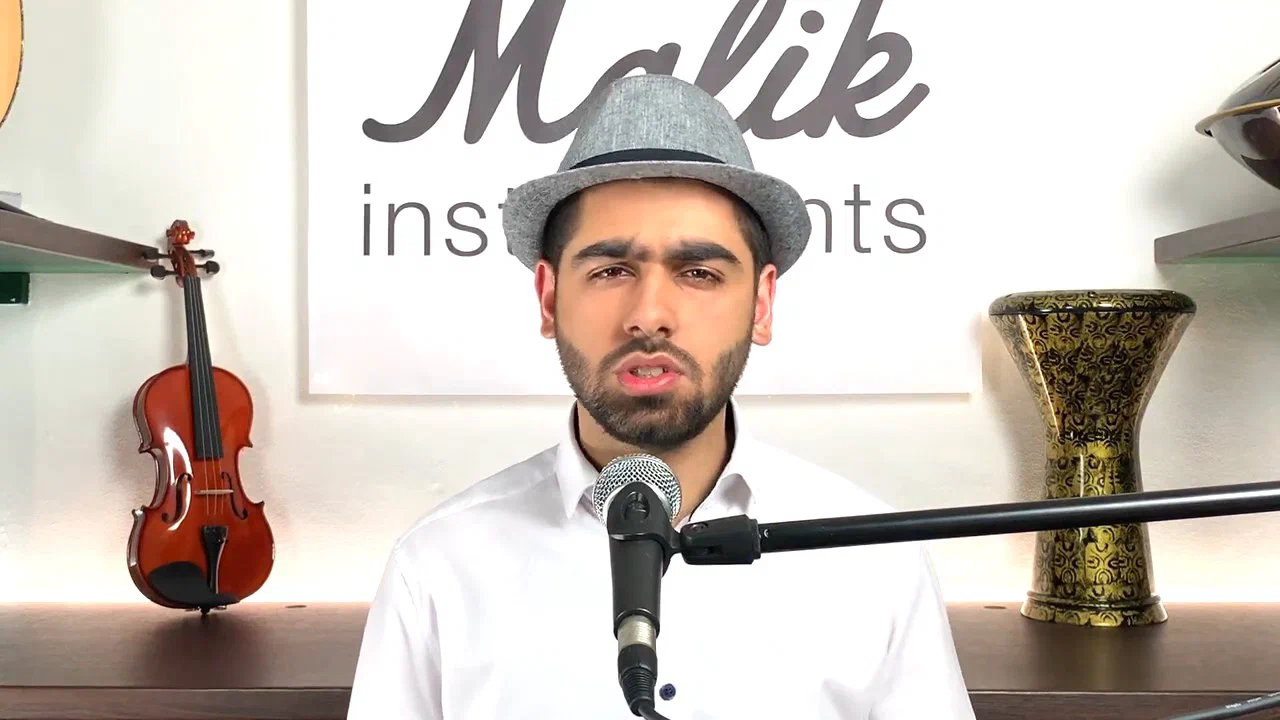
I’m Ibi Malik — darbuka player and teacher, founder of Malik Instruments and a former director of Gawharet El Fan. This is the story behind darbuka.org.

Hi, I’m Ibi #
Hello, and welcome to darbuka.org. I’m Ibi Malik — darbuka player, teacher, founder of Malik Instruments and a former director of Gawharet El Fan, one of Cairo’s great darbuka makers.
I started exactly where you’re starting. When I was first studying the darbuka in London, I asked my teacher how long I should practise. “About an hour,” he said. An hour a week? That’s not bad, I thought. He meant an hour a day.
I’ve been playing for over a decade now. I learnt sitting on the floor, the traditional way, and only got used to playing on a chair as I went further with my studies in London. My first teacher and I went on to perform together a lot and record together a lot — and to this day, his rhythms are always slightly different to mine, and mine to his. We learnt the same rhythm; we just interpret it differently. That’s the beauty of it. I had other teachers along the way too, including Djamel Ayachi, from Algeria, whose darbuka has a big letter A on all four sides. It’s personal to him, and I love that drum.
The darbuka opened every other door. I learnt the oud — which is when I finally learnt to read music — taught myself the piano, and these days I’ll happily record darbuka, riq, piano, handpan and vocals on the same track, all of it built on strong foundations on the darbuka. And if you asked me for one rhythm? The Maqsum, every time. I’d estimate that 70% of the time I perform, I’m playing it.
Since then I’ve performed at events and weddings, taught thousands of people to play, and spent years inside the darbuka world — from the workshops of Cairo to the warehouses and customs sheds that get a drum from a craftsman’s bench to a player’s lap.
The three drums I’d never part with #
- A 22 cm gold aluminium darbuka — one of my very first, and to be honest I have a sentimental attachment to it.
- My Pearl Temple Artisan Sombaty — the one you’ll see in every lesson. A Sombaty is slightly bigger than a standard darbuka: a bit more powerful, a bit stronger, and a deeper sound.
- A big clay bass doholla, made for me in Serbia by Lehel Nyers of Baraka Handmade Percussion — about 26 cm across and around 12 kilos. It’s a pleasure to play, and it’s what I bring out when I really want a lot of bass.
Where darbuka.org comes from #
Everything here is based on the Darbuka Mastery Programme, the course I created in 2020. It was built to take a complete beginner to strong foundations they can keep building on by themselves — because you cannot build on weak foundations, especially in music.
Everything here comes from that programme: every lesson, every rhythm, every photograph and every one of the 93 videos, rebuilt for the web and now free for everyone.
A short history #
Gawharet El Fan #
Gawharet El Fan — جوهرة الفن, “the jewel of art” — is a darbuka maker in Cairo, famous for its mother-of-pearl darbukas. Each one is inlaid by hand, piece by piece, by craftsmen who can spend up to two weeks on a single artisan drum.
My own story with them started long before I knew it. My first mother-of-pearl darbuka was one I bought from a street vendor in Fez, in Morocco. Years later I found out it was a Gawharet El Fan — and that the drums coming straight from their workshop were in a different league again.
Malik Instruments #
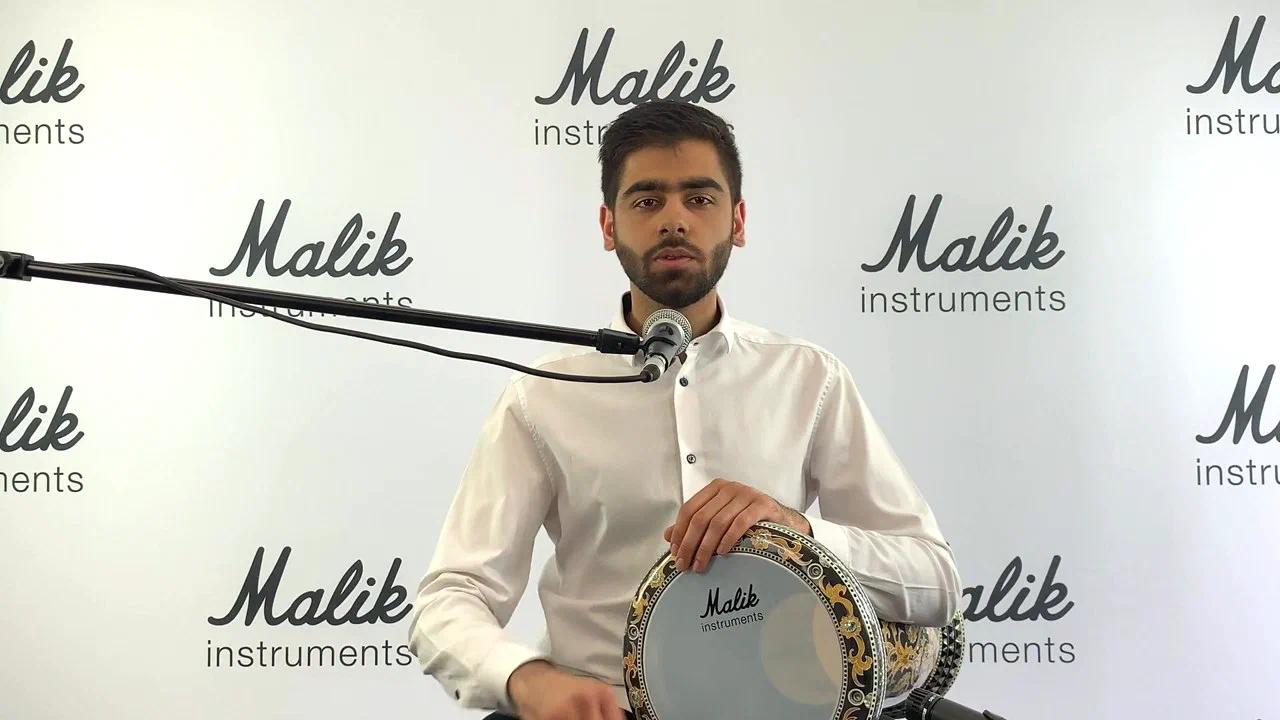
I founded Malik Instruments in London at the end of 2018 to do something surprisingly few people were doing well: get the very best Egyptian darbukas into the hands of players across Europe and North America — properly chosen, properly checked and properly looked after.
We sourced directly from Gawharet El Fan’s workshops in Cairo and worked with their master craftsmen on our own artisan designs. We’d draw each design in London and send it to Cairo, where the craftsmen checked it could be recreated on the shell — then, piece by piece and by hand, they inlaid the mother of pearl. These guys are incredible. I’m not that good with my hands. We checked every drum before it shipped, and sold across Europe and the US. The more drums we sold, the more people asked me the same question: now how do I play it? The Darbuka Mastery Programme was my answer.
Joining forces #
In 2020, Malik Instruments joined forces with Gawharet El Fan, and I went on to serve as Gawharet El Fan’s Managing Director for Europe & North America, leading the business through its expansion into both. That meant setting up its first international headquarters in Europe, bringing offices in four countries onto one way of working, and keeping a global supply chain moving through Brexit and the pandemic at the same time.
Setting the standard #
Along the way I spent a lot of time on something unglamorous that matters to every player: standards. Darbukas have always varied wildly — in size, weight, shell and finish, and in the skins they’re fitted with — and a beginner has no way of knowing what they’re buying.
So much of my work was about bringing consistency to the darbuka world: clear size classes (standard, Sombaty and Doholla), minimum weights and double-layered shells, quality checks on every drum, and better standard skins. You’ll see that thinking all through my buying guides — it’s how I’d want anyone to choose their first drum.
Why it’s free now #
The programme was built to be sold. Today I’d much rather it was used. Too many people pick up a darbuka, get stuck on the basics with no one to show them, and put it down for good. darbuka.org is my way of getting you past that — at your own pace, for nothing.
It won’t come without practice. But if you put the hours in, I promise you it will come.
What this site does — and doesn’t #
- Nothing to sign up for, nothing to buy. No accounts, no adverts, no affiliate links.
- No analytics, and no cookies from this site. If you tick “Mark as practised”, that’s stored in your own browser and nowhere else.
- The videos are on YouTube. Thumbnails load from YouTube’s image servers. The player itself only loads when you press play, using YouTube’s privacy-enhanced mode (youtube-nocookie.com); from then on, YouTube’s own privacy policy applies to that video.
- The drum sounds are synthesised in your browser when you press play on a tab — a guide to timing, not a recording of a real drum.
Get in touch #
Questions about a lesson, a story about your first Maqsum, or spotted a mistake? I’d love to hear from you: ibraheem@malik5.com.